

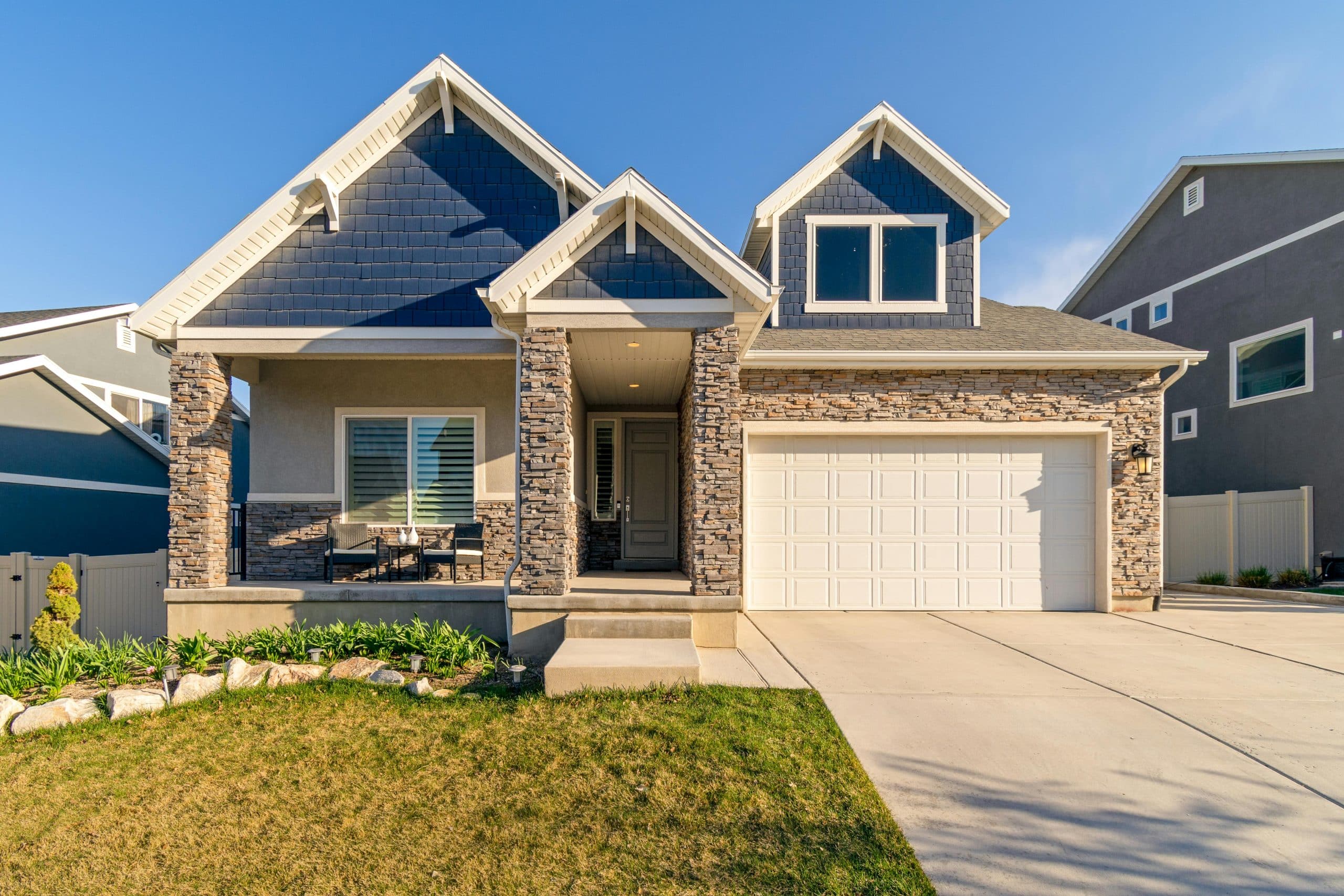
A vacant home isn’t a neutral asset. From the day you stop living in it, it starts costing you money, and the longer it sits empty, the more ways it finds to create problems.
Vacant properties face a set of risks that occupied homes simply don’t:
- Insurance policies have vacancy clauses that can void coverage.
- Pipes burst with no one home to catch the leak.
- Vandals target empty houses.
- Squatters move in and require a formal eviction to remove.
- HOA violations stack up while you’re not there to notice them.
And all of this happens while you’re paying carrying costs that range from $1,000 to $4,900 per month.
This guide breaks down the main risks and costs of holding a vacant house, shows how fast those expenses add up, and compares your selling options, including when an as-is cash sale may make sense.
Why vacant homes are a different problem than simply selling
Most home sale advice assumes you’re selling a house someone lives in. Vacant property sale is a different situation, and the risks compound in ways that occupied-home sellers never face.
Here’s what changes the moment a home becomes unoccupied:
Your insurance coverage may stop applying.
Standard homeowners policies include vacancy clauses, typically triggered after 30 to 60 consecutive days without occupancy.
Once that threshold passes, coverage for vandalism, theft, and water damage is often excluded, or the policy can be voided entirely under the terms of the ISO HO-3 standard policy language.
Most homeowners don’t know this until they file a claim and it gets denied.
The property deteriorates faster.
No one notices the slow roof leak, the HVAC that stopped running, or the faucet that froze.
Minor maintenance issues that would get caught immediately in an occupied home can turn into $10,000-$30,000 repair bills in a vacant one.
Vacant homes become targets.
Thieves strip copper pipes, HVAC units, and appliances. Vandals hit properties with no lights on at night.
The National Insurance Crime Bureau reports that vacant homes are five times more likely to be vandalized than occupied ones.
Local government notices.
Cities and counties have gotten aggressive about vacant properties. Many now require registration, charge annual fees, and fine owners for code violations.
HOA boards do the same.
The vacancy clause: what your insurance policy actually says
The specific language varies, but the ISO HO-3 policy, the industry standard, explicitly excludes vandalism and malicious mischief coverage after 60 consecutive days of vacancy.
Some carriers have shorter thresholds. A few are stricter about what “vacant” means (a house with furniture left behind may still qualify as vacant in insurer terms).
What this means in practice: if a break-in happens on day 65, your claim for the broken window, stolen appliances, and damage to entry points may be denied in full.
And because vacant homes are prime targets, a break-in is far more likely than in an occupied property.
Your options if a home is or will be vacant:
- Request a vacancy endorsement from your existing carrier. This rider maintains coverage during the vacancy period and typically costs 50 to 150% more than your standard premium.
- Switch to a standalone vacant property policy. These are written specifically for unoccupied homes and include protections standard policies exclude. Expect $150 to $400 per month.
- Do not let coverage lapse to save money. A single uninsured vandalism incident, water leak, or fire can cost $10,000 to $50,000, which is far more than any premium savings.
Squatters, vandalism, and theft: the physical risks
Vandalism and break-ins
Vacant homes get hit more often, and the damage tends to be worse. With no one home, there’s no deterrent and no one to call for help when something goes wrong.
Copper pipe and wire theft is common. A thorough copper stripping job can require $8,000 to $15,000 in repairs and leave the home unlivable until plumbing is restored.
HVAC unit theft runs $3,000 to $10,000 to replace.
Appliance theft, broken windows, graffiti, and structural damage from forced entry are all documented patterns in vacant properties.
Squatter occupation
Squatters are a worst-case scenario that vacant property owners sometimes discover months after the fact. Once someone occupies a property, removal often requires a painful legal process.
In most states, changing the locks yourself, removing belongings, or cutting off utilities to force someone out is illegal and can expose you to liability.
The formal eviction process typically takes 30 to 90 days from filing and costs $2,000 to $5,000 or more in legal fees, depending on the state and whether the squatter contests the eviction.
The practical prevention: secure every entry point before you leave. Board windows if necessary, change exterior locks, and set up basic security monitoring. This is much cheaper than the eviction alternative.
HOA fines and city violations on vacant properties
HOA enforcement
If the property is in an HOA community, the association’s maintenance requirements don’t pause for vacancy.
Grass still needs to be cut. Landscaping needs to be maintained. Exterior surfaces need to keep up with appearance standards.
Violation fines typically run $25 to $200 per month per infraction and compound.
An unmaintained vacant property can generate multiple simultaneous violations, including overgrown lawn, dead shrubs, peeling paint, and improperly stored items.
If the owner is out of state and not paying attention, these add up quickly.
City and county enforcement
Many municipalities now have vacant property registration programs.
Registration fees range from $300 to $500 per year in many cities, with additional fines for non-compliance. Code enforcement officers do routine sweeps and flag unoccupied-looking properties.
Overgrown vegetation, unsecured structures, and broken windows are the most common triggers. Fines compound monthly until violations are corrected and re-inspected.
In some cities, the municipality can perform the work itself and bill the owner, with interest.
For example, a homeowner receives $1,800 in stacked city fines over six months on an inherited vacant property they hadn’t decided whether to keep or sell.
The real monthly cost of holding a vacant home
Here’s what the carrying costs actually look like:
| Cost category | Monthly range | Notes |
|---|---|---|
| Mortgage / carrying interest | $800 – $2,500+ | Continues regardless of occupancy |
| Property taxes (prorated) | $200 – $800 | Cannot be deferred for vacancy |
| Vacant home insurance | $150 – $400 | Higher than standard homeowners premium |
| Utilities (minimal) | $100 – $300 | Heat and electricity to prevent damage |
| HOA fees | $0 – $500 | Plus potential violation fines |
| Maintenance (lawn, basic upkeep) | $100 – $300 | Prevents code violations |
| Security monitoring | $30 – $100 | Basic alarm or camera system |
| Monthly total | $1,380 – $4,900+ |
A realistic mid-range scenario: a home with a $1,500 mortgage, $250 in prorated property taxes, $250 for a vacant insurance rider, $150 for utilities, and $150 for lawn maintenance comes to $2,300 per month.
Over six months, while you debate what to do, that’s $13,800, before any repair bills, HOA fines, or vandalism losses.
That’s the real cost of delay. And it’s money you’ll never get back, regardless of what the home eventually sells for.
Selling a vacant house: your three options
Option 1: Traditional listing
A traditional MLS listing works if the property is in good shape, you have 3 to 6 months of runway, and you can manage showings on an empty home. The challenge is that vacant homes sell more slowly and at lower prices than furnished, staged ones.
Buyers have a harder time seeing potential in an empty space, and an unoccupied home signals questions about why no one is living there.
You’ll also carry the full holding costs throughout the entire listing period, plus pay a 5 to 6% commission at close. If the home needs any repairs that surface during an inspection, expect to negotiate further.
Option 2: Repair, stage, then list
If the property has strong underlying equity and a good location, front-loading repairs and staging can maximize the sale price.
The tradeoff: $5,000 to $20,000 or more in upfront costs, 2 to 4 months of project management time, and continued carrying costs throughout.
For out-of-state owners or those who’ve already had the property sit for months, this option often looks better in theory than it plays out in practice.
Option 3: Cash buyer — as-is, fast close
A cash buyer purchases the property in its current condition, with no repairs required, no staging, no showings, and no financing contingency. Close timelines run 7 to 21 days. You pick the date.
Cash offers typically come in at 70 to 85% of market value. That discount sounds significant until you run the actual math:
A home worth $250,000 with a cash offer at 78% gets you $195,000.
A traditional listing at full price nets $250,000 minus 6% commission ($15,000) minus $18,000 in six months of carrying costs minus $10,000 in pre-sale repairs. That’s $207,000.
The difference is $12,000 in favor of the traditional sale. But that’s before accounting for the risk of the deal falling through, additional repair requests post-inspection, or the holding costs continuing if the listing sits.
For owners dealing with high carrying costs, property deterioration risk, or squatter/vandalism concerns, the math often tilts toward the cash sale.
| Selling path | Timeline | Upfront cost | Best for |
|---|---|---|---|
| Traditional listing | 3 to 6 months | Low (commissions at close) | Good condition, time to wait |
| Repair, stage, then list | 4 to 8 months | $5,000 to $20,000+ | High equity, strong location |
| Cash buyer (as-is) | 7 to 21 days | $0 | High urgency, poor condition, out-of-state ownership |
Steps to sell a vacant house fast
Step 1: Secure the property now.
Change locks, secure windows and entry points, and set up basic security monitoring. This prevents vandalism, theft, and squatter occupation while you’re selling. It costs several hundred dollars and protects tens of thousands.
Step 2: Notify your insurer.
Call your insurance company today if you haven’t already. Ask specifically whether your current policy covers vacancy and what your threshold is. Request a vacancy endorsement or ask about a standalone vacant property policy.
Step 3: Get a market value estimate.
Request a cash offer from a reputable buyer. You’ll have a firm number within 24 hours with no obligation. You can also pull a comparative market analysis from a local agent. These two numbers give you a real range to work with.
Step 4: Calculate your net by timeline.
Add up your monthly carrying costs, then multiply by your realistic sale timeline for each option. A 5-month traditional listing at $2,200/month adds $11,000 to your cost basis before commissions and repairs.
Step 5: Choose your path and close.
If the math favors speed, or if the property’s condition, your timeline, or your distance from the property make a traditional sale difficult, request cash offers from 2 to 3 buyers, compare them, and pick a closing date. Stop the monthly bleed.
Frequently asked questions about selling a vacant house
Does homeowners insurance cover a vacant house?
Standard homeowners insurance typically excludes coverage for vandalism, theft, and water damage after a home has been vacant for 30 to 60 consecutive days. This vacancy clause is standard in most ISO HO-3 policies. Once triggered, key coverages may be voided or denied. To maintain coverage, you need a vacant property endorsement or a separate vacant home policy, which typically costs 50 to 150% more than standard coverage.
How much does it cost to hold a vacant home per month?
Holding costs for a vacant home typically range from $1,380 to $4,900 per month, covering mortgage or carrying interest, property taxes, vacant home insurance, utilities, HOA fees, and basic maintenance. A typical mortgaged vacant home runs $2,000 to $2,500 per month, which adds up to $12,000 to $15,000 over six months before any repair bills or fines.
Can squatters take over my vacant property?
Yes. If someone occupies a vacant property, removal requires a formal eviction filing in most states. Self-help removal, such as changing locks or physically removing belongings, is illegal in most jurisdictions and can expose the owner to liability. The eviction process takes 30 to 90 days and costs $2,000 to $5,000 or more in legal fees.
How fast can I sell a vacant house to a cash buyer?
Cash buyers typically close in 7 to 21 days on a vacant property. There are no financing contingencies, no appraisal requirements, and no repairs needed. You choose the closing date, and the property sells as-is in whatever condition it’s currently in.
Will my HOA fine me for a vacant property?
If your HOA has maintenance standards, which most do, they apply regardless of occupancy. Unmowed lawns, dead landscaping, and exterior disrepair all trigger violations. Fines typically run $25 to $200 per month per violation and compound until corrected.
Should I repair a vacant house before selling or sell as-is?
For most vacant homeowners with high carrying costs, selling as-is to a cash buyer produces a better net than repairing and listing traditionally. Repairs and staging can cost $10,000 to $30,000 upfront, and a traditional listing adds months of carrying costs. Run the specific math for your situation: Subtract realistic carrying costs from the higher traditional sale price, then compare that to a cash offer.
Can I sell a vacant house with outstanding city code violations?
Yes. A cash buyer will typically purchase the property as-is, including outstanding violations. The violations may be factored into the offer price, or the buyer may pay them off at closing. A traditional buyer using financing will generally require violations to be cleared before close.
Do I still owe property taxes on a vacant house?
Yes. Property taxes continue regardless of occupancy. Some homestead or owner-occupied tax exemptions may be revoked once the home is no longer your primary residence, which can increase your annual tax bill.
What is a vacant property endorsement?
A vacant property endorsement is an add-on to a standard homeowners policy that maintains coverage while the home is unoccupied. It typically costs 50 to 150% more than standard coverage and may carry higher deductibles for specific claims. It’s the minimum you should have if a standalone vacant home policy isn’t an option with your carrier.
How do I protect a vacant house from vandalism while I decide whether to sell?
Change the locks immediately. Secure all windows, side doors, and basement entries. Set up a security camera system with remote monitoring. Basic setups cost $100 to $300 and act as a deterrent. Keep the exterior maintained to avoid the “clearly abandoned” appearance. Notify neighbors and ask them to report anything unusual.
What to do next
- Call your insurance company today and ask specifically whether your property is still covered under your current policy, given the vacancy. Ask about a vacant property endorsement.
- Secure the property before it sits another week unmonitored. Change locks, secure entry points, and set up basic monitoring.
- Add up your true monthly holding costs, including mortgage, taxes, insurance, utilities, HOA, and maintenance. Multiply by your expected sale timeline for each option.
- Get a no-obligation cash offer to see where you stand. You’ll have a firm number within 24 hours and can use it to compare against a traditional listing net after carrying costs and commissions.
- Compare your options with real numbers, not ballpark estimates. The carrying cost math often surprises owners who’ve been focused on sale price alone.
For most vacant homeowners, the goal is simple: stop the monthly losses and get to a close. A cash buyer offers a direct path to that outcome. No repairs, no ongoing carrying costs, and a closing date you control.